
Tool Guides
How to Use a Hori Hori Knife: The One Tool That Replaces Half Your Toolbox
Oct
What Is a Hori Hori Knife?
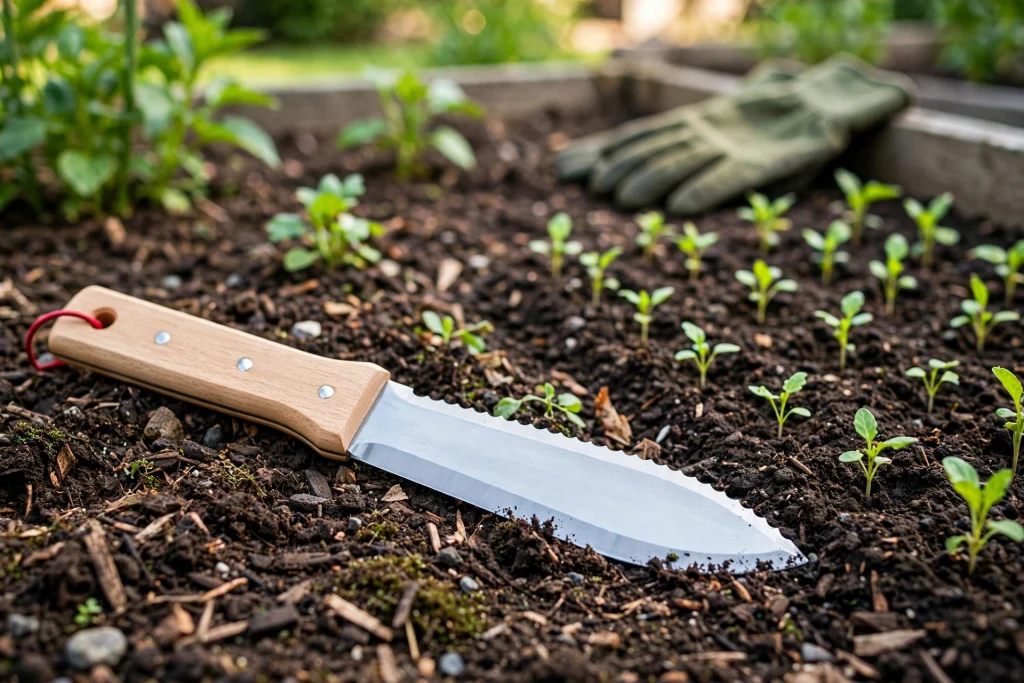
A hori hori knife is a heavy-duty digging blade, usually 7 to 12 inches long, with one smooth edge and one serrated edge. Most models have inch markings etched along the blade, which is a genuinely useful feature: you can measure planting depth without carrying a ruler.
Traditional Japanese versions were designed for harvesting mountain plants, but modern gardeners use them for just about everything. Unlike a flimsy hand trowel, a good hori hori has a full-tang, thick steel blade that can pry, saw, and dig through tough soil and roots.
Hori Hori vs. a Regular Garden Trowel
A standard trowel digs and scoops. A hori hori digs, scoops, cuts, saws, weeds, divides, measures, and opens bags. Here is where the two diverge:
- Strength: A hori hori’s thick blade handles prying and root-cutting that would bend a cheap trowel in half.
- Versatility: The serrated edge saws through thick roots, cuts twine and landscape fabric, and even opens fertilizer bags.
- Precision: The pointed tip and depth markings make it ideal for planting bulbs, seedlings, and seeds at exact depths.
- Edge holding: A carbon steel hori hori can be sharpened like a real knife and will hold an edge far longer than stamped aluminum trowels.
That said, a trowel is still handy for scooping loose potting mix. The hori hori just does everything else better.
9 Ways to Use a Hori Hori Knife in Your Garden
1. Planting Bulbs, Seeds, and Seedlings
This is the hori hori’s signature job. Drive the pointed tip into the soil, rock it back and forth to open a hole, check the depth markings on the blade, drop in your bulb or seedling, and firm the soil back. One tool, one motion, done.
2. Digging Out Stubborn Weeds
Slide the blade alongside a weed’s root crown, angle it underneath, and pop the whole root out — taproot and all. The serrated edge is perfect for slicing through the fibrous roots of dandelions and thistles.
3. Dividing Perennials
Push the blade straight down through the root ball of hostas, daylilies, or ornamental grasses, then rock it to split the clump. The serrated side saws through thick rhizomes cleanly, giving each division a healthy set of roots.
4. Cutting Through Roots
When a transplant hole has a tree root running through it, do not wrestle with it — saw through it with the serrated edge. It handles roots up to about half an inch thick with ease.
5. Opening Soil for Transplants
The pointed tip makes a fast pilot hole for seedlings, cuttings, and plugs. In compacted or rocky soil where a trowel skitters off the surface, the hori hori’s sharp point gets purchase immediately.
6. Harvesting Vegetables
Use the blade to loosen soil around carrots, potatoes, and garlic, then lift them without snapping the tops. The serrated edge also cuts leafy greens and herbs at the base.
7. Measuring Planting Depth
The etched inch markings on the blade double as a ruler. Planting garlic two inches deep? Seeds at a quarter inch? Push the blade in and read the mark. It is faster than carrying a measuring tape around the garden.
8. Cutting Twine, Fabric, and Bags
Keep the hori hori in your tool belt and you will stop hunting for scissors. It slices open potting soil bags, cuts garden twine, and trims landscape fabric without missing a beat.
9. Scoring Root-Bound Plants
Before potting up a root-bound nursery plant, drag the serrated edge down the sides of the root ball in a few places. This encourages new roots to grow outward instead of circling.
How to Hold and Use It Safely
A hori hori is a real blade, so respect it like one:
- Use the smooth edge for digging and prying, the serrated edge for cutting and sawing. You will keep both edges sharper longer.
- Cut away from your body. When sawing through roots or fabric, angle the blade outward, never toward your fingers.
- Do not twist it like a lever. The blade is strong, but rocking it side to side with all your weight can bend or snap it — and it can slip suddenly. Pry with controlled, short movements.
- Wear gloves. The handle can get slick with sweat or wet soil, and a slip near the blade is no fun.
- Store it in a sheath. Most hori hori knives come with a sheath or guard. Use it. A naked blade rattling around a tool bucket is how accidents happen.
Choosing the Right Hori Hori Knife
Not all hori hori knives are equal. Here is what to look for:
- Full tang construction: The metal should run through the handle in one piece. Riveted or welded handles are failure points.
- Stainless steel blade: It resists rust far better than carbon steel, which matters for a tool that lives in damp soil. Carbon steel is tougher and easier to sharpen, but it needs oiling after use.
- Blade length around 7–8 inches: Long enough for real digging, short enough to control.
- Comfortable, grippy handle: Wood, rubber, or textured plastic — pick what fits your hand. You will use this tool more than any other, so comfort matters.
- Sheath included: A sturdy sheath protects the blade and your hands during storage and transport.
Avoid the very cheapest options: a thin blade with a hollow handle will flex and eventually break right where you need it most.
Cleaning and Maintenance
A hori hori is low maintenance, but a little care keeps it sharp and rust-free for years:
- Rinse or wipe off soil after each use. Dried mud holds moisture against the blade.
- Sharpen the smooth edge periodically with a sharpening stone or file, following the existing bevel. Touch up the serrations with a small round file if they get dull.
- Oil carbon steel blades lightly after use to prevent rust. Stainless blades just need to be clean and dry.
- Tighten the handle hardware now and then if your model has screws or rivets.
- Store it dry and sheathed, out of the weather.
Done consistently, a good hori hori knife will outlast a drawer full of cheap trowels.
The Bottom Line
The hori hori knife earns its reputation because it does the work of several tools in one compact package. It digs, cuts, measures, weeds, divides, and harvests — all while holding an edge that cheap hand tools cannot match. If you are building a garden toolkit that lasts, this is the piece to start with.
Looking to upgrade your digging game? Browse our Digging & Planting and Pruning & Cutting collections to find a hori hori knife and the other essentials that make garden work faster and easier.
