
Gardening Tips
Succulent Care Guide for Indoor Gardeners
Oct
Few houseplants win over new gardeners like succulents. They are compact, sculptural, and come in endless shapes and colors — from rosette echeverias to trailing strings of pearls. They are also marketed as nearly indestructible, which is why so many of us have watched a beautiful arrangement slowly turn to mush on a windowsill.
The truth is simpler: succulents are easy once you understand what they actually want. Their needs are very different from leafy houseplants, and most problems come from treating them the same way. Follow this guide and you will be the person whose succulents thrive instead of merely survive.
Why Succulents Make Great Indoor Plants
Succulents evolved to store water in thick leaves, stems, or roots, so they can go days or even weeks without a drink. That makes them forgiving of a busy schedule or the occasional forgotten watering. They need little soil, stay small for years, and many tolerate dry indoor air far better than tropical plants.
That said, “low maintenance” is not “no maintenance.” Indoors, succulents depend entirely on you for light, drainage, and restraint. Get those three right and everything else is easy.
Light Is the Number-One Requirement
This is where most indoor succulents fail. In their native habitats, these plants soak up intense sun. A dark corner of a room will slowly starve them, even if they look fine for the first few weeks.
Give your succulents the brightest spot you have — ideally a south- or west-facing window that gets four to six hours of direct or very bright indirect sun. An east-facing window works for many varieties if it is unobstructed. Rotate the pot a quarter turn every week or two so all sides grow evenly.
Signs your succulent needs more light
- The plant stretches tall with wide gaps between leaves (this is called etiolation).
- Lower leaves drop off and the rosette shape loosens.
- Colors fade; stressed, sun-happy succulents often show red, purple, or pink edges.
If you see stretching, move the plant closer to the window gradually — a sudden jump from dim to full sun can scorch leaves. In rooms with weak winter light, a simple full-spectrum grow light on a timer (12–14 hours a day) works wonders.
Watering: Soak, Then Let It Dry Completely
Overwatering kills more indoor succulents than everything else combined. These plants are designed for cycles of drenching rain followed by long dry spells, so copy that pattern.
The soak-and-dry method:
- Check the soil first. Stick your finger an inch or two deep — water only when it is completely dry.
- Water thoroughly until it flows freely from the drainage hole.
- Empty the saucer so the pot never sits in standing water.
- Wait. In bright summer conditions this may mean watering every 7–10 days; in winter, every 3–4 weeks or longer.
When in doubt, wait another day. A slightly thirsty succulent perks right back up; a rotted one rarely does.
Soil: Fast Drainage Is Non-Negotiable
Regular potting soil holds far too much moisture for succulents. You need a gritty, fast-draining mix that lets water rush through while still giving roots something to grip.
A simple homemade recipe that works for most indoor succulents:
- 2 parts regular potting soil
- 1 part coarse sand or perlite
- 1 part fine pumice or small gravel
If you would rather buy a bagged mix, look for one labeled specifically for cacti and succulents, and stir in extra perlite if it feels dense. Never let a succulent sit in heavy, soggy soil — root rot is the price of poor drainage.
Choose the Right Pot
A pot with a drainage hole is almost mandatory for beginners. Unglazed terracotta is an excellent choice because the clay wicks moisture away from the roots, giving you an extra margin of safety against overwatering.
Size matters too. A pot just slightly wider than the plant is ideal; an oversized pot holds excess soil that stays wet long after the plant has had enough. Shallow, wide containers suit most rosette types, while deeper pots work better for upright varieties like snake plants.
Temperature and Humidity
Most succulents are comfortable in normal indoor temperatures (60–80°F) and actually benefit from slightly cooler nights. They tolerate dry heated air in winter better than almost any other houseplant, so you can skip the humidifier — high humidity encourages rot.
Watch out for cold drafts. Many succulents are damaged by frost and chilly windows in winter; keep them a few inches back from freezing glass and away from direct blasts from air conditioning vents in summer.
Feeding: Less Is More
Succulents are light feeders. During the growing season (spring and summer), a diluted dose of balanced houseplant fertilizer once a month is plenty. Use it at half the strength listed on the label — these plants evolved in poor soils and overfeeding causes weak, stretched growth.
Skip fertilizer entirely in fall and winter, when most succulents slow down or go dormant. Feeding a dormant plant does nothing but build up salts in the soil.
Troubleshooting Common Problems
- Mushy, translucent leaves: Overwatering. Stop watering immediately, improve drainage, and remove any rotten leaves or stems. If the stem is mushy at the base, the plant may be beyond saving — try propagating healthy leaves.
- Leggy, stretched growth: Not enough light. Move to a brighter spot and consider pruning the stretched top to encourage a new, compact rosette.
- Wrinkled, shriveled leaves: The plant is thirsty. Give it a thorough watering and it should plump up within a day or two.
- Brown, crispy leaf tips: Usually sunburn from a sudden move to intense light, or occasionally mineral buildup. Acclimate gradually and water with room-temperature water.
- White, cottony spots: Mealybugs, the classic succulent pest. Dab them off with a cotton swab dipped in rubbing alcohol and isolate the plant until the infestation clears.
Repotting Without the Stress
Succulents need repotting only every one to two years, or when roots crowd the pot. The process is simple:
- Water lightly a few days ahead so the soil holds together but is not wet.
- Gently loosen the root ball and shake off old soil.
- Place in a slightly larger pot with fresh, dry succulent mix.
- Wait three to five days before watering so any damaged roots can heal.
Wear thin gloves or use tongs and folded newspaper when handling spiny types like cacti.
A Small Collection Goes a Long Way
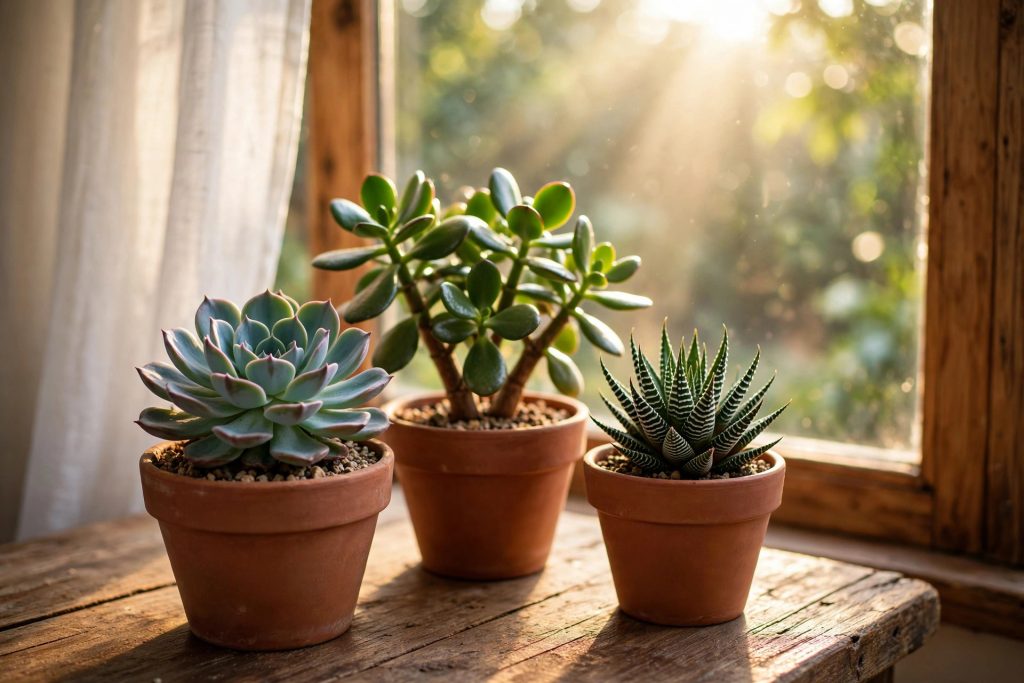
Start with three or four easy varieties — jade plant, echeveria, haworthia, or a burro’s tail — and learn their rhythms before expanding. Succulents reward patience: a plant that has settled into its light and watering routine will grow steadily for years, and many produce offsets (baby plants) you can separate and share.
Once you stop fighting their nature and start working with it — bright light, gritty soil, and water with restraint — succulents truly live up to their reputation as the most forgiving plants in your home.
Tip: if you are setting up your first indoor succulent arrangement, our Digging & Planting collection has the hand tools you need for potting and repotting, and Garden Accessories offers planters and pots sized for healthy root growth.
