
Gardening Tips
Summer Watering Mistakes to Avoid
Oct
Water is the one thing every garden needs, yet it is also one of the easiest things to get wrong. In summer, when the sun is strong and the soil dries out fast, many gardeners water more often, water at the wrong time, or water in a way that never actually reaches the roots. The result is familiar: wilting plants despite daily watering, yellow leaves, and shallow roots.
The good news is that most summer watering problems come from a handful of fixable habits. Change how, when, and how deeply you water, and your plants will usually respond within a week or two.
Mistake 1: Watering a Little Bit Every Day
A quick sprinkle each morning feels caring, but it only wets the top inch or two of soil. Roots stay near the surface, where the soil dries out fastest, so plants become dependent on that daily drink and wilt the moment you skip a day.
Instead, water deeply and less often. Soak the soil until moisture reaches six to eight inches down for most vegetables and flowers, and even deeper for shrubs and trees. Then let the top few inches dry out before watering again. Deep watering encourages roots to grow downward, where the soil stays cooler and moister for longer. A simple test helps: push a finger or a screwdriver into the soil after watering. If it slides in easily to several inches, you have watered deeply enough. If only the surface is damp, keep going.
How often you need to water deeply depends on your soil, your plants, and the weather. Sandy soil drains fast and may need watering every two to three days in a heat wave. Clay soil holds water much longer and may only need a deep soak once a week. New transplants and container plants dry out fastest of all and need closer attention. The soil, not the calendar, should tell you when to water.
Mistake 2: Watering in the Heat of the Day
Watering at noon, when the sun is at its strongest, wastes a surprising amount of water. Much of it evaporates before it ever soaks in, and droplets sitting on leaves in hot sun can scorch tender foliage.
The best time to water is early in the morning, ideally before 10 a.m. The air is cooler, evaporation is lower, and any water on leaves has the whole day to dry, which reduces disease problems. Late afternoon is the second-best option, but avoid watering late in the evening: leaves that stay wet all night invite fungal diseases, especially on tomatoes, squash, and roses.
Mistake 3: Sprinkling the Leaves Instead of the Roots
Overhead sprinklers are convenient, but they are inefficient and often unhealthy for plants. A lot of water lands on paths, fences, and leaves rather than on the root zone, and wet foliage is an open invitation to mildew, blight, and other leaf diseases.
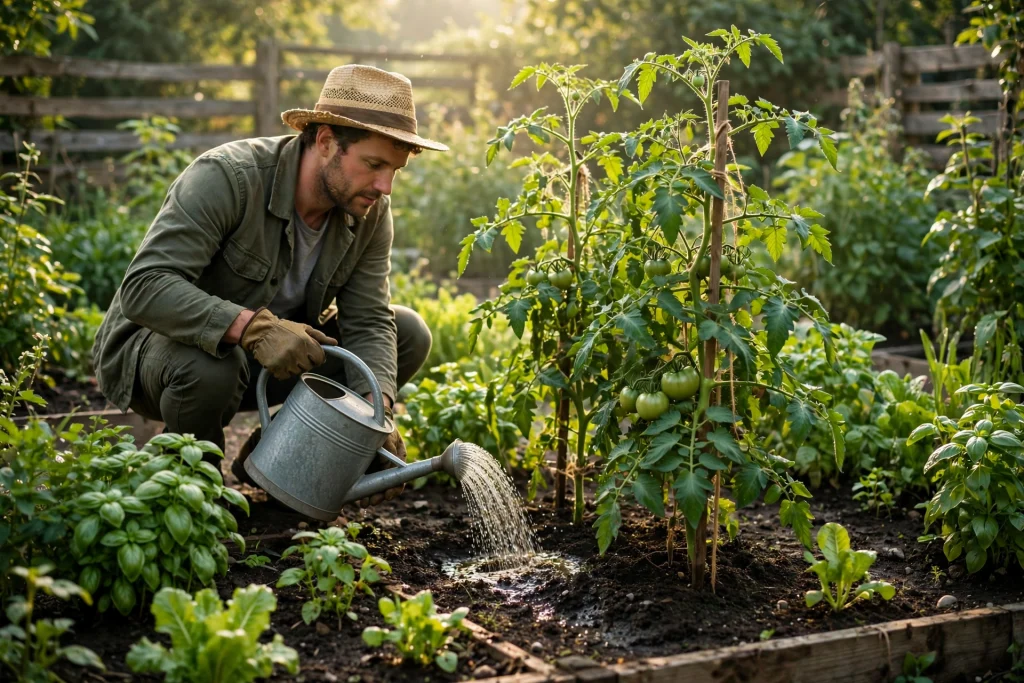
Water at the base of each plant instead. A watering can, a soaker hose, or a drip system all deliver water directly to the soil where roots can use it. Soaker hoses are especially useful for rows of vegetables: lay them along the soil surface, cover them lightly with mulch, and let them run slowly so water soaks in rather than running off.
Mistake 4: Skipping Mulch
Bare soil in summer is a problem. The sun bakes it, the wind dries it, and every watering evaporates faster than it should. Gardeners who skip mulch often end up watering twice as often as their mulched neighbors.
A two- to three-inch layer of mulch — straw, shredded leaves, wood chips, or grass clippings — shades the soil, slows evaporation, and keeps soil temperatures steadier. It also suppresses weeds that compete with your plants for water. Keep mulch a couple of inches away from plant stems to avoid rot, and top it up as it breaks down.
Mistake 5: Watering on Autopilot
A sprinkler timer set in spring can be exactly wrong by July. It waters on rainy days, waters the same amount during a cool week as during a heat wave, and never notices that one bed is in full sun while another sits in shade.
Check the weather and the soil before you let any automatic system run. Skip watering after a good rain, and give extra water during hot, windy spells. If you use a timer, adjust it at least once a month through summer, and consider a simple soil moisture meter for a more honest reading.
Container plants deserve special attention here. Pots dry out far faster than garden beds, especially terracotta pots in full sun. Check containers daily in summer, and water until water comes out of the drainage holes.
Mistake 6: Ignoring Your Soil Type
Two gardens on the same street can need very different watering, simply because their soils differ. Sandy soil drains quickly and needs more frequent, lighter watering. Clay soil holds water well but absorbs it slowly, so a fast blast from a hose mostly runs off the surface. Loamy soil, the gardener’s favorite, sits happily in the middle.
For clay soil, water slowly and in stages: water for a few minutes, let it soak in, then water again. Adding compost each season gradually improves both sandy and clay soils, helping them hold moisture while still draining well.
Mistake 7: Watering New Plants Like Established Ones
Newly planted seedlings, transplants, and shrubs have small, shallow root systems and cannot reach deep moisture yet. Treating them like established plants is one of the quickest ways to lose them in a heat wave.
For the first few weeks after planting, keep the root zone consistently moist — not soggy, but never bone dry. Water new plants every day or two in hot weather, then gradually stretch the interval as they establish and roots grow deeper.
A Simple Summer Watering Routine
If you take away only one habit, make it this: check the soil before you water, water deeply at the base of the plant in the morning, and mulch everything you can.
Here is a quick checklist to keep by the back door:
- Push a finger two to three inches into the soil. Water only if it feels dry at that depth.
- Water slowly at the base of the plant until the soil is moist six to eight inches down.
- Water in the morning when possible, and keep leaves as dry as you can.
- Mulch beds two to three inches deep, keeping mulch away from stems.
- Check containers daily, and adjust any timer after rain or a cool spell.
- Watch your plants: drooping in the afternoon heat that recovers by morning is often normal, but plants still wilted at dawn genuinely need water.
Summer watering is not about giving your garden more water. It is about giving it water in the right place, at the right time, and in the right amount.
For the tools that make deep, targeted watering easier — from watering cans and soaker hoses to moisture meters — browse the Watering & Irrigation collection at Grow Tool Depot: https://growtooldepot.store/product-category/watering-irrigation/ — and keep your beds mulched and tidy with supplies from the Garden Accessories collection: https://growtooldepot.store/product-category/garden-accessories/
