
Gardening Tips
The Fall Garden Cleanup Checklist: 8 Jobs to Do Before Winter
Oct
October is the garden’s golden month — the tomatoes are done, the mums are out, and the leaves are starting to fall. It’s tempting to call it a season and head inside, but a little effort now pays off big in spring. A proper fall cleanup protects your plants, your soil, and your tools through the cold months, so you can start next season ahead instead of behind.
Grab a thermos of coffee and work through this checklist over a weekend or two. Your garden will thank you.
1. Clear Out Dead Plants and Spent Crops
Once a plant is done for the year, it’s just taking up space — and worse, it can harbor diseases and pests over winter. Pull up spent annuals, finished vegetable plants, and any foliage that’s yellowed or diseased.
Toss healthy plant material on the compost pile. But be ruthless with anything that showed signs of blight, mildew, or insect damage — bag it and throw it in the trash instead. Composting diseased plants at home rarely gets hot enough to kill pathogens, and you’ll just reintroduce the problem next year.
Leave the roots of peas and beans in the ground if you can. These legumes fix nitrogen in the soil, and their roots will feed next year’s plants as they break down.
2. Tackle the Leaves (But Don’t Throw Them Away)
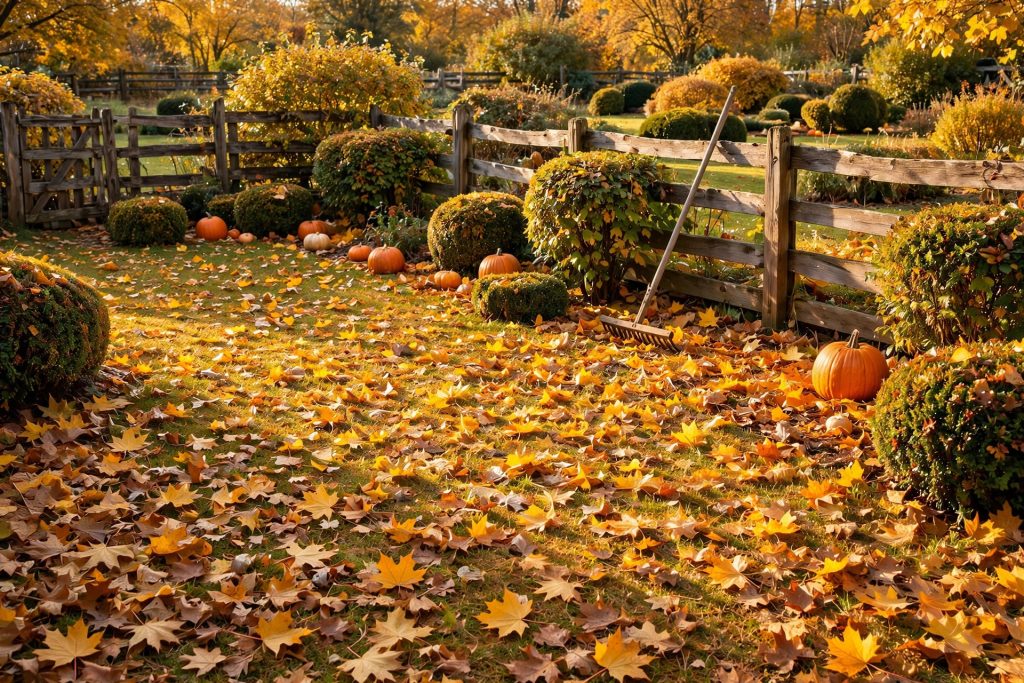
Fallen leaves are one of the best free resources a gardener gets. Rake them off the lawn — a thick mat of wet leaves will smother grass and invite fungal disease — but don’t bag them for the curb.
Instead, shred them with a mower and use them as mulch around trees, shrubs, and garden beds. Leaf mulch insulates the soil, suppresses weeds, and breaks down into rich organic matter by spring.
3. Clean, Sharpen, and Store Your Tools
This is the job everyone skips — and regrets in April. Dirty tools rust, dull blades tear instead of cut, and wooden handles crack.
Here’s the routine:
- Scrape off caked soil with a stiff brush or putty knife, then wash with soapy water.
- Dry thoroughly. Every minute a tool sits wet is an invitation to rust.
- Sharpen blades on pruners, shears, hoes, and shovels with a file or sharpening stone. A sharp edge does cleaner work and is actually safer.
- Oil metal parts lightly with vegetable oil or a silicone spray to prevent rust.
- Sand wooden handles smooth and rub in a little linseed oil to keep them from splitting.
- Store everything indoors — a shed, garage, or basement beats leaving tools out in the weather all winter.
A clean tool roll or storage bag keeps everything organized and protected until spring.
4. Feed and Prep the Soil
Fall is the ideal time to improve your soil because amendments have all winter to break down and integrate. Start by pulling a final round of weeds — don’t let them go to seed now, or you’ll fight ten times as many in spring.
Spread 2–3 inches of compost over your beds and let the worms do the tilling for you. If your soil is heavy clay, work in some coarse organic matter. A soil test in fall is smart too: it gives you time to add lime or sulfur and let pH adjustments take effect before planting season.
Consider planting a cover crop like winter rye or clover in empty vegetable beds. It prevents erosion, suppresses weeds, and adds nitrogen when you turn it under in spring.
5. Mulch Your Perennials
After the first hard frost — not before — tuck your perennials in with 2–3 inches of mulch. Straw, shredded leaves, or bark all work well.
Why wait for the frost? Mulching too early can trap warmth and trick plants into new growth that winter will kill. The goal is to keep soil temperature stable through freeze-thaw cycles, which can heave roots right out of the ground.
6. Protect Young Trees and Shrubs
Newly planted trees are vulnerable in their first couple of winters. Wrap the trunks of young fruit and ornamental trees with tree guards or burlap to prevent sunscald — that’s the bark damage caused by warm winter sun followed by freezing nights — and to deter rabbits and deer from gnawing.
A ring of mulch around the base (kept a few inches away from the trunk itself) insulates roots. For broadleaf evergreens like rhododendrons, an anti-desiccant spray or a burlap windscreen on the windy side helps prevent winter leaf burn.
7. Give Everything a Final Deep Watering
Once trees and shrubs drop their leaves, they still need water — especially evergreens, which keep losing moisture through their needles all winter. After the leaves fall but before the ground freezes, give everything a long, deep soak.
This is especially important if your fall has been dry. Plants that go into winter drought-stressed are far more likely to suffer winter damage. Water slowly so it soaks in rather than running off, and focus on new plantings from this year.
Drain and store garden hoses before the first hard freeze, and shut off outdoor faucets or cover them with insulated faucet covers. A burst pipe is an expensive way to learn this lesson.
8. Plan for Spring While It’s Fresh
Before you hang up the gloves, take ten minutes with a notebook. What worked this year? What flopped? Which bed gets the most sun, and where did the slugs do the worst damage?
Sketch a rough planting plan for spring while this season’s layout is still fresh in your mind. Note which seeds to order, which tools need replacing, and any projects — like that raised bed you’ve been meaning to build — to tackle over winter.
Fall is also a great time to buy: many garden suppliers run end-of-season sales, and you’ll beat the spring rush.
Your Fall Cleanup Checklist at a Glance
- [ ] Pull spent annuals and finished vegetable crops; trash diseased foliage
- [ ] Rake leaves off the lawn; shred and use as mulch or compost
- [ ] Clean, sharpen, oil, and store all garden tools indoors
- [ ] Weed beds one final time and spread compost
- [ ] Mulch perennials after the first hard frost
- [ ] Wrap young tree trunks and protect vulnerable shrubs
- [ ] Deep-water trees, shrubs, and evergreens before ground freeze
- [ ] Drain hoses and shut off outdoor faucets
- [ ] Write down this year’s lessons and sketch next spring’s plan
Do these eight jobs now, and when the first warm days of spring arrive, you’ll be planting while your neighbors are still cleaning up. Happy fall gardening!
A good cleanup goes faster with the right gear in hand. Stock up on sturdy weeders and cultivators from our Weeding & Cultivating collection, and keep everything organized through winter with a durable set from our Tool Sets & Storage collection.
