
Tool Guides
How to Choose Gardening Gloves: A Practical Guide for Home Gardeners
Oct
Why Gloves Matter More Than You Think
It is easy to treat gardening gloves as an afterthought — something you grab off a store shelf or accept from a neighbor. But a good pair of gloves is one of the hardest-working pieces of gear you own. The right pair protects you from blisters, thorns, splinters, and soil-borne microbes, while the wrong pair leaves you fumbling with seedlings and sweating by mid-morning. Here is how to pick gloves you will actually enjoy wearing.
Your hands take the brunt of garden work. Digging, raking, pruning, and hauling all grind skin against tool handles and rough materials. Beyond comfort, gloves are a safety issue: rose thorns can cause painful punctures, damp soil can harbor fungi and bacteria that infect small cuts, and repeated exposure to sap and certain plants can trigger contact dermatitis.
A glove that fits well makes you more likely to wear it every time, which is the whole point. The best gardening glove is the one that stays on your hands.
Start With the Job, Not the Glove
Gardening is not one task — it is dozens. The gloves that are perfect for planting seedlings will be miserable for pruning roses. Before shopping, think about what you actually do most:
- Light planting and weeding: You need dexterity and a breathable fabric.
- Digging and heavy soil work: You need padding and reinforced palms.
- Pruning thorny plants: You need long, puncture-resistant gauntlets.
- Wet work (watering, muddy spring beds): You need water-resistant material.
Many experienced gardeners own two or three pairs for different jobs. If you can only buy one pair, choose for your most common task.
Know the Main Glove Materials
Leather
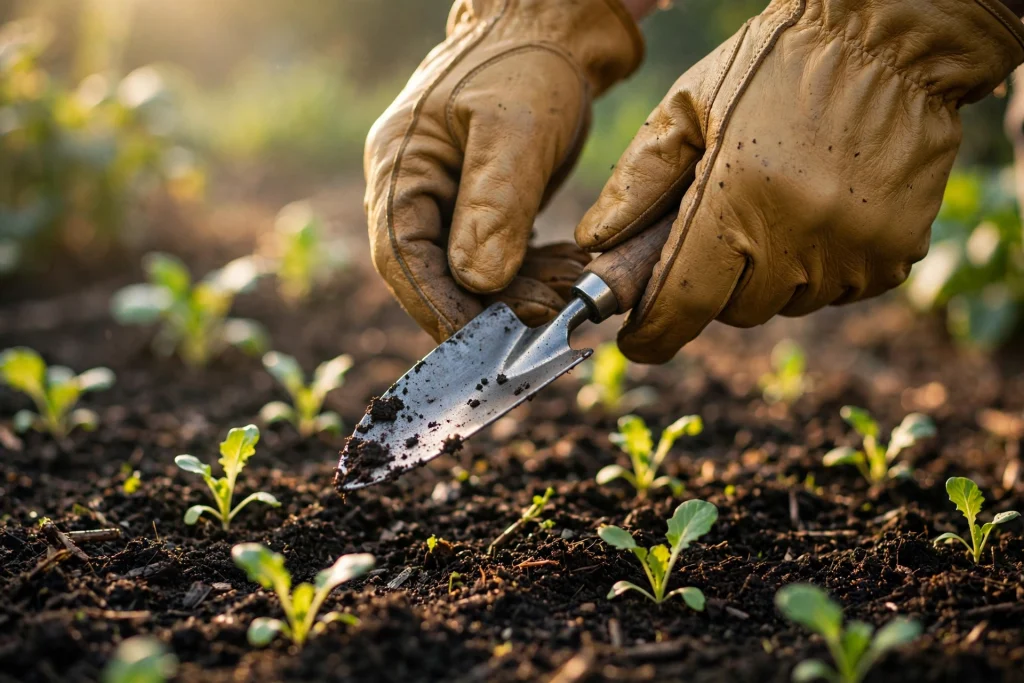
Leather — usually goatskin or cowhide — is the gold standard for durability and puncture resistance. Goatskin is softer and more flexible, making it a great all-rounder. Cowhide is thicker and tougher, better for heavy-duty work. Leather conforms to your hand over time, and it naturally resists thorns and sharp stems. The trade-off: it is not great in wet conditions, and quality leather costs more.
Synthetic Leather
Synthetic leather (polyurethane-based) mimics real leather at a lower price and is often machine washable. It offers good grip and decent puncture resistance, though it typically wears out faster than real leather. It is a solid choice for general-purpose gardening on a budget.
Cotton and Knit
Lightweight cotton or knit gloves are breathable, cheap, and excellent for delicate work like transplanting seedlings or handling small seeds — you can actually feel what you are doing. Most have rubber or latex-coated palms for grip. The downside is minimal protection: thorns and wet soil go right through them.
Nitrile, Latex, and Rubber-Coated
These gloves coat a fabric base with a grippy, water-resistant layer. They are fantastic for wet, muddy work and offer good dexterity. Nitrile-coated gloves are a favorite for planting and weeding in damp spring soil. Note that some people are allergic to latex, so nitrile is the safer default.
Gauntlet-Style Gloves
For roses, brambles, and thorny shrubs, look at gauntlet gloves with extended cuffs that reach the forearm. They are usually leather or heavy synthetic, and they are the only real answer to rose thorns. If you prune roses even occasionally, these are worth owning.
Fit Is Everything
A glove that is too loose slips, bunches, and makes you drop things. Too tight, and your hands cramp and fatigue. Here is how to check the fit:
- Try them on like you would shoes — at the end of the day, when your hands are at their fullest size.
- Check finger length. Your fingertips should reach the ends without excess material, but the glove should not pull tight across your knuckles.
- Test your grip. Pick up a trowel or a small object. You should feel secure without the fabric stretching thin.
- Flex your hand. Make a fist and spread your fingers. A good fit moves with you, without pinching.
- Check the cuff. It should sit snugly at the wrist to keep out soil and debris, but not cut off circulation.
If you are between sizes, most gardeners prefer the smaller size for precision work and the larger for heavy-duty tasks.
Features Worth Looking For
- Reinforced palms and fingertips: The areas that wear out first. Extra padding here dramatically extends glove life.
- Touchscreen-compatible fingertips: Useful if you photograph your garden or check a plant app mid-task.
- Adjustable wrist closures: A velcro or elastic cuff keeps soil, mulch, and insects out.
- Breathable backs: Mesh or ventilated panels reduce sweat on warm days.
- Machine washability: Gloves get filthy. Being able to toss them in the wash is a genuine convenience — just air-dry leather, never machine-dry it.
Caring for Your Gloves
A little maintenance goes a long way. Shake out soil after each use and let gloves dry fully before storing — damp gloves breed mildew. Wash fabric and synthetic gloves regularly. For leather, wipe them clean, let them air-dry away from direct heat, and occasionally apply a light leather conditioner to keep them supple.
Store gloves in a dry spot, and consider hanging them on a hook rather than cramming them into a pocket where they stay damp. Replace gloves when the palms wear thin or stitching fails — worn-out gloves protect nothing.
Quick Recommendations by Gardener Type
- The weekend vegetable grower: A pair of nitrile-coated knit gloves for wet spring work plus a leather pair for heavier tasks.
- The rose enthusiast: Leather gauntlet gloves, full stop. Forearm protection is non-negotiable around thorns.
- The container gardener: Lightweight cotton or synthetic gloves with coated palms — you need feel and flexibility more than armor.
- The beginner who wants one pair: Goatskin leather gloves. They handle 80% of garden tasks well and last for years.
The Bottom Line
Choosing gardening gloves is not complicated once you match the glove to the job. Pick your most common task, choose the right material for it, nail the fit, and maintain what you buy. Your hands — and your garden — will thank you.
Pair your new gloves with the right gear for the job. Browse our pruning tools for pruning shears and saws, or check out our gardening accessories for knee pads, tool belts, and more.
