Gardening Tips
How Much Water Do Vegetables Need? A Practical Watering Guide
Oct
Ask ten gardeners how much water their vegetables need, and you might get ten different answers. Some swear by daily watering, others barely touch the hose. The truth is that most vegetables follow a simple rule of thumb — and once you understand it, watering becomes one of the easiest parts of gardening.
This guide breaks down exactly how much water common vegetables need, how to tell when your plants are thirsty, and the mistakes that cause more damage than drought ever could.
The Golden Rule: About One Inch Per Week
Most vegetables need roughly one inch of water per week, from rain or your hose. That’s the baseline that university extension programs have recommended for decades, and it holds up in home gardens across the country.
But that one-inch figure is just a starting point. It assumes average soil, average weather, and established plants. Sandy soil drains faster and needs more frequent watering; clay soil holds moisture longer and needs less. Hot, windy weeks evaporate water quickly, while cool, overcast stretches stretch it out.
The trick isn’t memorizing a number — it’s learning to read your soil.
How to Check Whether Your Vegetables Need Water
Forget the calendar. Instead, use your finger. Push it about two inches into the soil near the base of your plants. If the soil feels dry at that depth, it’s time to water. If it’s still damp, wait another day.
A few more reliable signs:
- Wilting in the morning. Plants that wilt in the afternoon heat often perk up by evening, and that’s normal. If they’re still wilted first thing in the morning, they need water.
- Light-colored, crumbly soil. Dark soil is moist soil. When the top two inches turn pale and powdery, moisture is running low.
- Containers dry out fast. Vegetables in pots and raised beds can need water twice a day in peak summer, while in-ground beds might only need it twice a week.
How Much Water Do Specific Vegetables Need?
Not all vegetables drink equally. Here’s a rough breakdown of common garden crops:
Heavy Drinkers
These plants want consistently moist soil and are the first to complain when it’s dry:
- Tomatoes — 1 to 2 inches per week, especially once fruit starts setting. Inconsistent watering causes cracked fruit and blossom end rot.
- Cucumbers — 1 to 2 inches per week. They’re nearly 95% water, and bitter fruit is often a sign of thirst.
- Peppers — About 1 inch per week, slightly less once established. Too much water dilutes flavor.
- Lettuce and leafy greens — 1 to 1.5 inches per week. Shallow roots mean they dry out fast, and drought makes them bitter and prone to bolting.
Moderate Drinkers
These do fine on the standard one inch per week:
- Beans and peas — About 1 inch per week. Overwatering invites root rot, so let the top inch of soil dry between waterings.
- Carrots — Around 1 inch per week. Consistent moisture keeps roots straight and sweet; alternating wet and dry spells causes forking.
- Zucchini and summer squash — 1 inch per week is usually plenty. They’re forgiving plants, though steady moisture boosts yield.
Drought-Tolerant Vegetables
Once established, these handle dry spells well:
- Herbs (rosemary, thyme, oregano) — Let soil dry out between waterings. Many Mediterranean herbs prefer it on the dry side.
- Sweet potatoes — Thrive with modest water once vines are established.
- Okra — Loves heat and tolerates drier conditions better than most vegetables.
The Right Way to Water: Deep and Infrequent
The single biggest watering mistake is sprinkling a little water every day. Shallow watering trains roots to stay near the surface, where they’re vulnerable to heat and drought. Instead, water deeply and less often — a good long soak that reaches 6 to 8 inches down encourages roots to grow deep and strong.
Other best practices:
- Water in the morning. Leaves dry quickly in the morning sun, which reduces fungal disease. Evening watering leaves foliage damp overnight — an open invitation for mildew and blight.
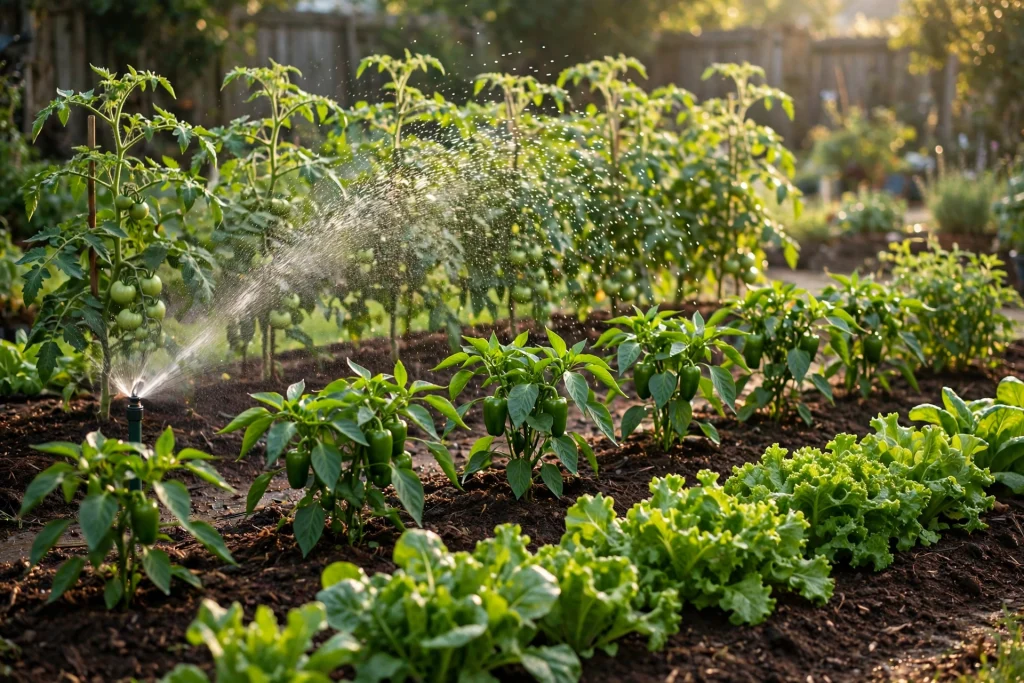
- Aim for the base of the plant. Water the soil, not the foliage. Drip irrigation and soaker hoses are ideal for this.
- Mulch your beds. A 2- to 3-inch layer of straw, shredded leaves, or bark keeps soil cool and moist, cutting your water needs by up to a third.
- Use a rain gauge or an empty tuna can. Set it in the garden while you water to measure how much you’re actually applying. You’ll be surprised how long it takes to deliver a real inch.
5 Watering Mistakes That Hurt Your Harvest
- Watering on a fixed schedule instead of checking soil moisture. Weather changes; your routine should too.
- Watering in the heat of the day. Midday watering loses much of its moisture to evaporation before it reaches the roots.
- Using a hard spray on seedlings. A strong blast of water can damage tender stems and compact the soil. Use a gentle shower setting.
- Ignoring containers. A tomato in a pot can use twice the water of the same plant in the ground. Check pots daily in summer.
- Quitting in late summer. As harvests roll in, it’s tempting to slack off — but many vegetables keep producing into fall if you keep watering.
When in Doubt, Watch the Plants
Gardening is part science, part observation. The one-inch rule gives you a target, the finger test gives you a method, and your plants give you feedback. Yellow lower leaves can mean overwatering; wilted mornings mean underwatering. Adjust, observe, and adjust again.
Get watering right and your vegetables will reward you: crisper greens, juicier tomatoes, and a garden that practically takes care of itself between rains.
Looking to make watering easier? Browse our watering and irrigation tools — from gentle hose nozzles to drip irrigation kits — and pick up garden accessories like mulch and soil meters to keep every drop working harder.
