
Gardening Tips
How to Remove Weeds Without Chemicals: A Gardener’s Complete Guide
Oct
Weeds are the uninvited guests of every garden. They steal water, sunlight, and nutrients from the plants you actually want. The good news is that you do not need chemical herbicides to win this fight. With the right techniques and a few simple tools, you can keep weeds under control naturally — safely around kids, pets, pollinators, and your vegetable beds.
Why Go Chemical-Free?
Chemical weed killers work fast, but they can harm bees, ladybugs, and other beneficial insects, contaminate soil and groundwater, and drift onto plants you meant to keep. Manual and cultural methods take a little more effort, but they build a healthier garden ecosystem over time.
Start With Good Technique: Pull the Whole Root
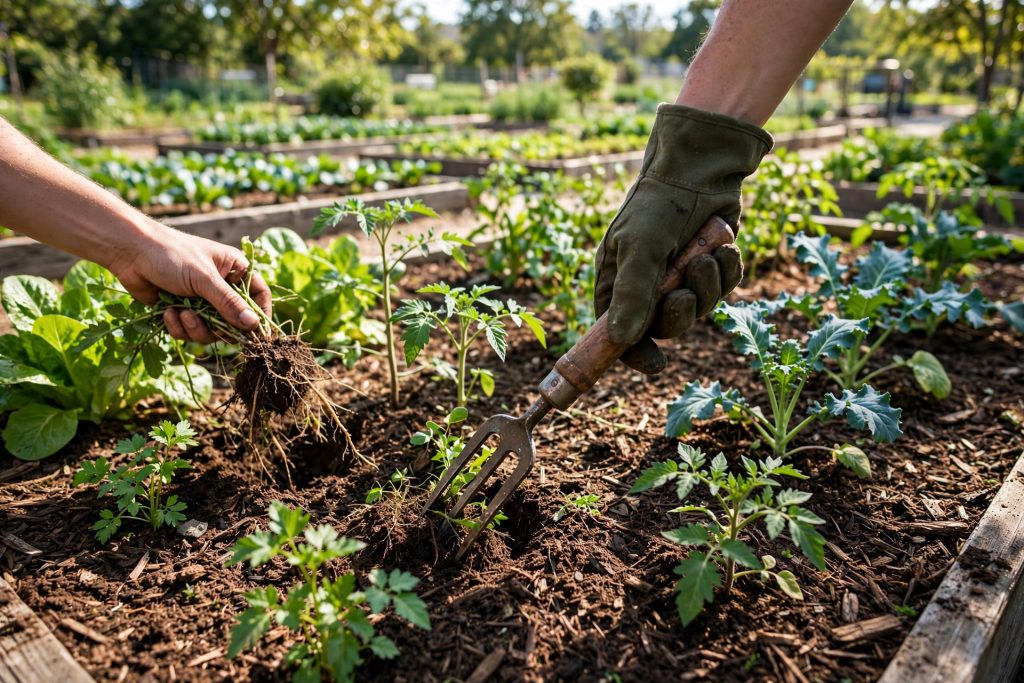
The number one mistake gardeners make is snapping weeds off at the surface and leaving the root behind. Most weeds — especially dandelions, thistles, and plantain — will simply regrow from a leftover root fragment.
Here is the technique that works:
- Weed after rain or watering. Moist soil lets roots slide out much more easily than dry, compacted soil.
- Grip low, near the base. Grab the weed as close to the soil line as possible rather than yanking from the top leaves.
- Pull slowly and steadily. A quick jerk snaps stems; a slow, firm pull with a slight twist brings the root system up intact.
- Use a hand weeder for taproots. Slide a forked or narrow-blade weeder under the root crown and lever upward. This is far more effective than fingers for dandelions and dock.
Timing matters enormously. Pull weeds before they set seed — a single crabgrass plant can scatter thousands of seeds. Walk the garden once a week during the growing season and catch weeds while they are small, when roots are shallow and pull out with almost no effort.
The Best Tools for Chemical-Free Weeding
The right tool turns weeding from a chore into a quick task. These are the workhorses of the chemical-free garden:
Hand Weeder
A short, narrow tool with a forked or V-shaped tip, perfect for popping out individual weeds between plants. Keep one in your pocket or tool belt whenever you walk the garden — spot weeding as you go is the easiest weed control there is.
Stirrup (Hula) Hoe
This clever tool has a thin, U-shaped blade that skims just under the soil surface, slicing weeds off at the roots as you push and pull. It is fast, efficient, and barely disturbs the soil. Use it on dry days so severed weeds shrivel instead of re-rooting.
Garden Fork and Cultivator
For larger infestations, loosen the soil with a fork first, then pull. A three-prong cultivator is great for breaking up the top layer of soil in beds, uprooting weed seedlings before they establish.
Kneeling Pad or Garden Stool
Comfort is what keeps you weeding regularly instead of putting it off. A thick kneeling pad protects your knees, and a rolling garden seat saves your back during longer sessions.
Mulch: Your Best Long-Term Defense
The single most effective chemical-free weed strategy is also the simplest: cover bare soil. Most weed seeds need light to germinate, and a thick layer of mulch blocks it.
- Apply 3–4 inches of organic mulch (wood chips, shredded bark, straw, or leaf mold) around trees, shrubs, and in ornamental beds. Keep it a couple of inches away from plant stems to prevent rot.
- In vegetable beds, use straw, shredded leaves, or grass clippings (from untreated lawns) between rows.
- Refresh annually. Mulch breaks down, which is good for the soil but means you need to top it up each spring.
- Try sheet mulching for new beds: lay cardboard over weedy ground, wet it down, and cover with mulch. The cardboard smothers existing weeds and decomposes within a season.
Boiling Water and Vinegar: Use With Caution
Two popular home remedies deserve an honest look:
Boiling water is excellent for weeds in sidewalk cracks, gravel paths, and driveway edges. It kills on contact but is completely non-selective — spill it on your lawn and it will kill the grass too. Pour slowly right at the weed’s crown.
Household vinegar (5% acetic acid) burns the top growth of young weeds but rarely kills established roots, so regrowth is common. Stronger horticultural vinegar (20%+) is more effective but is a genuine acid — handle it with protective gear. Think of vinegar as a spot treatment for paths and patios, not garden beds.
Flame Weeding Basics
A flame weeder — a long wand attached to a small propane torch — kills weeds with a quick pass of heat. You are not incinerating the weed; a one- to two-second pass that wilts the leaves is enough, and it dies over the next day or two.
Flame weeding is ideal for gravel driveways, paths, fence lines, and clearing a bed before planting (the “stale seedbed” technique: prepare soil, wait a week for weeds to sprout, flame them, then plant).
Safety rules are non-negotiable: never use a flame weeder near dry mulch, wooden structures, or on windy days, and keep a hose or fire extinguisher within reach. It is fast and deeply satisfying, but respect the tool.
Prevent Regrowth: Play the Long Game
Removing weeds is only half the battle. The other half is making sure they do not come back:
- Plant densely. Bare soil is an invitation. Ground covers and closely spaced plants shade the soil and outcompete weeds.
- Do not let weeds seed. One season of neglect can load your soil with years of future weeds. Pull before flowers turn to seed.
- Edge your beds. A clean trench or physical edging stops creeping grasses from invading from the lawn.
- Water your plants, not the weeds. Drip irrigation or soaker hoses deliver water to root zones; overhead sprinklers water every weed seed in the area.
- Never compost seed heads. Bag them and trash them — a home compost pile is not hot enough to kill seeds reliably.
A Simple Weekly Routine
You do not need to spend hours. Fifteen minutes a week, done consistently, beats a marathon session once a month. Walk each bed with a hand weeder and a bucket, pull anything small, run the stirrup hoe through open soil on a dry day, and check that mulch is still 3–4 inches thick.
Consistency is the real secret. Weeds are opportunists — they exploit neglect. A gardener who weeds a little, often, will always have fewer weeds than one who waits for the problem to look serious.
The Bottom Line
Chemical-free weed control is not about working harder; it is about working smarter. Pull roots, not just tops. Mulch every bare inch of soil. Weed early and often. Your soil, your pollinators, and your vegetables will thank you.
Ready to stock up on weeding essentials? Browse the Weeding & Cultivating collection at Grow Tool Depot for hand weeders, hoes, and cultivators that make chemical-free weed control faster and easier.
