Tool Guides
How to Choose the Right Garden Hose Nozzle
Oct
A good hose nozzle is one of those small upgrades that changes your whole watering routine. The wrong one leaves you with a sore thumb, soaked shoes, and seedlings flattened by a blast of water. The right one makes watering feel almost relaxing. Here is how to pick one that actually fits your garden, your hands, and your water pressure.
Why Your Nozzle Matters More Than You Think
Most people grab whatever nozzle is cheapest at the checkout aisle and live with the consequences. But a nozzle is the control center of your watering. It decides how much water comes out, how far it reaches, and how gently it lands. A ten-dollar upgrade can mean the difference between thriving tomato plants and a muddy mess.
Know Your Spray Patterns
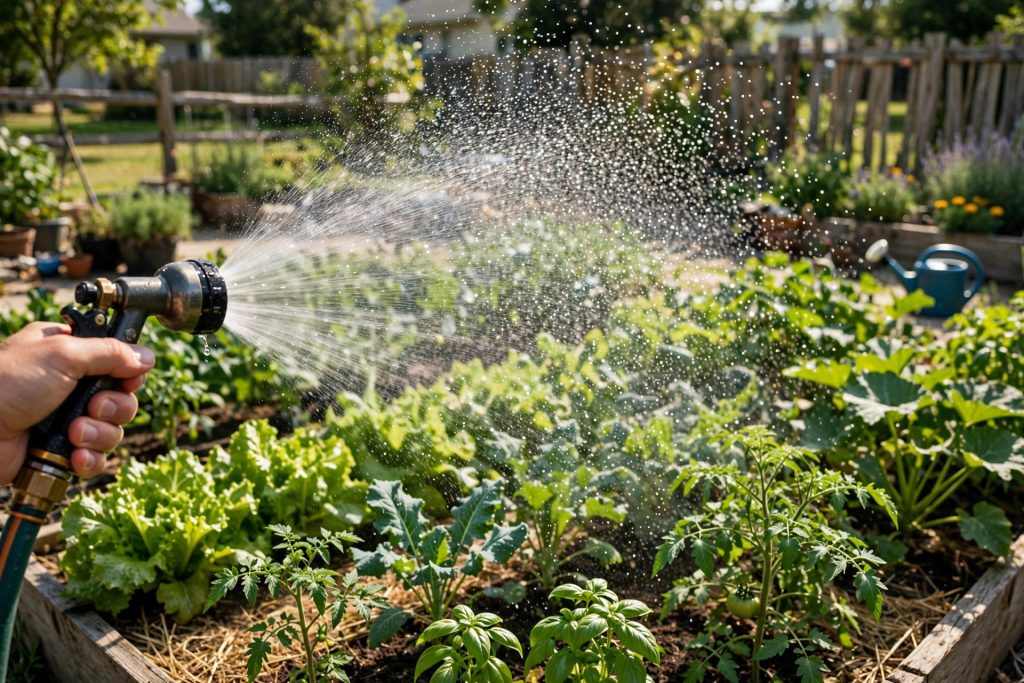
Modern nozzles offer anywhere from five to ten spray patterns on a rotating dial. It sounds like overkill until you realize each pattern solves a different problem. Here are the most common ones and what they are actually good for:
- Shower — A soft, rain-like spray over a wide area. This is your everyday workhorse: watering flower beds, vegetable rows, and established plants without disturbing the soil.
- Mist — An ultra-fine fog. Perfect for delicate seedlings, starting seeds, and giving hanging baskets a gentle drink. It also works nicely for cooling down a patio on a hot afternoon.
- Jet — A single powerful stream. Not for plants at all — this one is for blasting dirt off the driveway, cleaning patio furniture, or reaching the far corner of the yard.
- Flat / Fan — A wide, flat sheet of water. Great for rinsing off the car, washing down deck boards, or sweeping leaves off the sidewalk.
- Cone — A circular spray that is narrower than shower but softer than jet. Useful for watering shrubs and bushes at medium distance.
- Soak / Full — Maximum flow with minimal spread. Handy for filling watering cans and buckets fast, or deep-watering the base of a tree.
- Center — A soft stream from the middle of the head. A good compromise for potted plants on a balcony where you do not want overspray.
If you only water containers and a few beds, a nozzle with shower, mist, and jet covers nearly everything. If you also wash the car and clean the deck, look for one with seven or more patterns so you get the flat and cone settings too.
Metal vs. Plastic: Picking a Body Material
Nozzle bodies generally come in two camps: plastic (often ABS) and metal (usually zinc alloy or brass).
Plastic nozzles are light, inexpensive, and will not get burning hot if you leave them in the sun. Good ones with rubberized grips can last several seasons. The downside is that cheap plastic threads strip easily and the bodies can crack if dropped on concrete or left out through a freeze.
Metal nozzles feel solid in the hand and stand up to drops, kicks, and general abuse. Brass fittings resist corrosion far better than plain metal. The trade-offs are weight — your wrist will notice the difference after ten minutes — and price, which runs noticeably higher.
For most home gardeners, a well-made plastic nozzle with metal fittings is the sweet spot: light enough for daily use, tough where it counts. If you are hard on tools or share the hose with kids, go full metal.
Grip and Comfort: The Part Nobody Tests in the Store
Here is the feature that matters most and gets the least attention. A nozzle with a stiff trigger or an awkward grip will punish you every time you water.
Look for these comfort details:
- A trigger lock or hold-open clip. This keeps the water flowing without constant squeezing. Your forearm will thank you.
- A rubberized or textured grip. Wet hands plus smooth plastic equals a nozzle that wants to escape.
If you have arthritis or limited hand strength, prioritize a thumb-control nozzle with a lock. They require far less grip force than pistol-style triggers.
Water Pressure: Match the Nozzle to Your Spigot
All the spray patterns in the world mean nothing if your water pressure cannot drive them. Most American homes deliver somewhere between 40 and 80 PSI at the outdoor spigot, which is plenty for any standard nozzle.
A few practical notes:
- Low pressure (rural wells, long hose runs): Choose a nozzle with fewer, simpler patterns. Every extra setting is another restriction the water has to fight through.
- Very high pressure: A jet setting at 80 PSI can strip mulch right off a bed. Look for nozzles with a flow-control dial so you can turn the volume down without walking back to the spigot.
You do not need a pressure gauge to figure this out. If your current nozzle barely pushes water past the end of the driveway, you have low pressure. If the jet setting stings your hand, you have high pressure.
Quick-Connect Fittings: The Upgrade You Will Love
Here is the single best quality-of-life improvement for anyone who swaps attachments: quick-connect fittings. Instead of threading the nozzle on and off the hose end every time — cross-threading it half the time — you snap it on and off in one second.
A basic set costs a few dollars: one female connector that stays on the hose, and male adapters for each attachment. Brass quick-connects last far longer than plastic ones and are worth the small premium.
One tip: buy all your connectors from the same system. Mixing brands can cause slow drips at the joint.
Keeping Your Nozzle in Good Shape
A hose nozzle is a simple tool, and a little care goes a long way:
- Drain it before winter. Water trapped inside expands when it freezes and cracks the body — the number one killer of nozzles. Disconnect it, shake it out, and store it in the garage or shed.
- Rinse off grit. Sand and sediment wear out the internal seals. A quick rinse after muddy jobs takes five seconds.
- Check the washer. That little rubber ring where the nozzle meets the hose is what stops leaks. If your connection drips, replace the washer before you blame the nozzle. Keep a few spares in a drawer.
- Do not leave it baking. UV light makes plastic brittle over time. Tossing the nozzle in the shade when you coil up the hose adds years to its life.
The Bottom Line
Start with your real routine. Mostly watering beds and containers? A mid-range multi-pattern nozzle with a comfortable grip and a trigger lock does the job. Washing cars and cleaning decks too? Get the full pattern range. Hard on equipment? Go metal with brass fittings.
Ready to upgrade your watering setup? Browse our watering and irrigation collection for hose nozzles, sprinklers, and everything else your garden needs to stay happy.
