
Gardening Tips
Growing Herbs Indoors Year-Round: A Beginner’s Guide
Oct
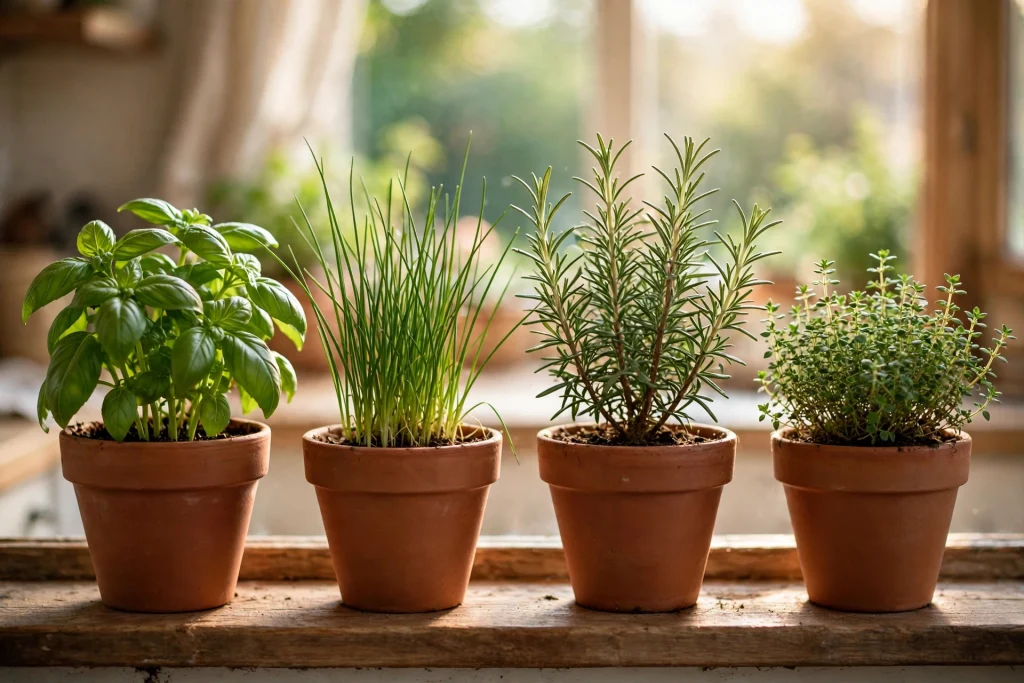
Fresh basil in January. Snipped chives for your morning eggs in February. A sprig of rosemary over roasted potatoes whenever you like — no trip to the store, no sad wilted plastic clamshells. Growing herbs indoors means the kitchen garden never really closes, even when snow is piling up outside.
The good news: most culinary herbs are far easier to grow on a windowsill than people expect. You don’t need a greenhouse, a grow tent, or a green thumb. You need decent light, the right pot, and a little patience.
Which Herbs Grow Best Indoors?
Not every herb is a great indoor candidate. Some, like dill and cilantro, bolt quickly and prefer cooler seasons; you can still grow them, but they’ll need frequent replanting. Start with the reliable workhorses — these tolerate indoor conditions and bounce back after harvest:
The easy wins
Basil — The classic indoor herb. It loves warmth, needs regular watering, and actually produces more leaves the more you pinch it back. Genovese is the go-to for pesto; Thai basil adds a spicy note to stir-fries.
Chives — Practically indestructible. They tolerate lower light than most herbs, regrow quickly after cutting, and a single pot can keep producing for years.
Mint — Grows so aggressively it’s often better indoors, where the pot keeps it contained. Keep its soil consistently moist and it’ll thrive.
Parsley — Slow to start from seed, so buy a nursery plant. Flat-leaf (Italian) parsley has more flavor than curly; both handle indoor life well.
The moderate crew
Rosemary — A Mediterranean native that wants as much sun as you can give it and soil that dries out between waterings. Keep it in a sunny spot and don’t fuss over it.
Thyme — Another sun-lover that prefers to dry out. It’s slow-growing indoors, but a little goes a long way in cooking.
Oregano — Compact and forgiving. Give it good light and it will reward you with harvestable stems within weeks.
Setting Up: Light, Pots, and Soil
Light matters most
Light is the single biggest factor in indoor herb success. Herbs need roughly 6 hours of bright light per day, and most kitchen windows only deliver that from a south- or west-facing sill. East-facing windows work for the more tolerant herbs (chives, mint, parsley), but basil and rosemary will get leggy and pale there.
If your windows are shaded or you live in a northern climate, an inexpensive LED grow light makes all the difference. Hang it 6–12 inches above the plants and run it 12–14 hours a day. It doesn’t have to be fancy — even a full-spectrum LED shop light outperforms a dim windowsill in winter.
Signs of too little light: stretched, spindly stems, small pale leaves, and herbs that lean hard toward the window. Rotate pots a quarter turn every few days to keep growth even.
Pick the right containers
Herbs hate sitting in water. Whatever pot you use must have drainage holes — no exceptions. A 6-inch pot is a good starting size for a single herb; small 3–4 inch pots dry out too fast and stress the plant.
Terracotta is ideal because it’s porous and lets the soil breathe. If you use a decorative outer pot, always keep the nursery pot inside so you can lift it out to check drainage. Put a saucer or tray underneath, and empty standing water after each watering.
Soil and feeding
Use a quality potting mix, not garden soil — garden soil compacts in containers and can carry pests indoors. A general-purpose indoor potting mix works for everything; if you tend to overwater, mix in a handful of perlite for extra drainage.
Feed lightly. A diluted liquid fertilizer (half strength) every 2–4 weeks during active growth is plenty. Herbs grown for flavor don’t want heavy feeding — too much nitrogen produces lush but bland leaves.
Watering: The Most Common Mistake
Most indoor herbs die from overwatering, not underwatering. The rule is simple: check the soil before you water. Push your finger an inch into the mix. If it’s dry at that depth, water thoroughly until it drains from the bottom. If it’s still damp, wait.
That said, different herbs have different thirst levels:
- Thirsty (keep evenly moist): basil, mint, parsley, chives, cilantro
- Drought-tolerant (let dry out between waterings): rosemary, thyme, oregano, sage
Group herbs with similar water needs together so you’re not guessing pot by pot. And always water in the morning — wet leaves and damp soil overnight invite fungal problems.
Harvesting Without Harming the Plant
The secret to a steady supply: harvest often, but never take more than a third of the plant at once. Pinching basil regularly is actually what keeps it bushy — if you let it flower, the leaves turn bitter, so snip off any flower buds you see.
For basil, pinch just above a pair of leaves; two new stems will branch out from that point. For chives, cut whole blades from the base rather than trimming the tops. For woody herbs like rosemary and thyme, snip stem tips and never cut into the old woody growth — it may not regrow.
Harvest in the morning when the essential oils are most concentrated, and use or dry your herbs the same day for the best flavor.
Troubleshooting Common Problems
Leggy, stretched growth — Almost always a light problem. Move the plant closer to the window or add a grow light.
Yellowing leaves — Usually overwatering. Let the soil dry out and make sure the pot drains freely. If only the lowest leaves yellow, it may just be the plant shedding old foliage.
Tiny black flies (fungus gnats) — A sign the soil surface stays too wet. Let the top inch dry out between waterings, and the gnats will fade on their own.
Powdery white coating on leaves — Powdery mildew, common in still, humid air. Improve air circulation (a gentle fan helps), avoid wetting the leaves when you water, and remove affected leaves.
Pests — Aphids and spider mites occasionally hitchhike in on nursery plants. Rinse the plant under the tap, and treat with insecticidal soap if they persist.
What You Need to Get Started
You need less gear than you think: a few pots with drainage, good potting mix, and a sunny spot or a simple grow light. A small watering can with a narrow spout makes it easy to water without splashing the leaves, and a pair of herb scissors or small snips makes harvesting clean and quick.
Browse our garden tool sets and storage for everything from watering cans to precision pruning snips, or check the digging and planting collection for hand tools that make potting up new herbs a breeze.
