
Gardening Tips
Mulching Guide: Types, Benefits, and How to Get It Right
Oct
Mulching Guide: Types, Benefits, and How to Get It Right
Few gardening habits pay off as fast as mulching. A few inches of the right material around your plants can cut watering in half, smother weeds before they start, and slowly feed your soil at the same time. Yet mulch is also easy to get wrong — too much, too little, or the wrong type can cause more problems than it solves. Here is what mulch actually does, which types suit which situations, and how to apply it so your garden gets the full benefit.
Why Mulch Works So Well
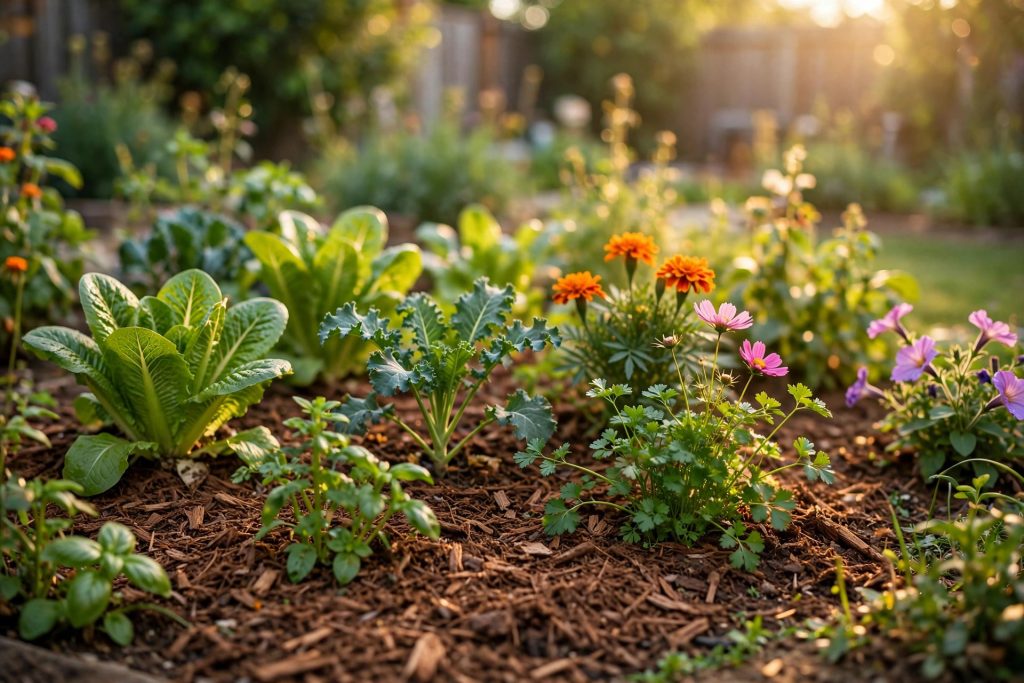
Think of mulch as a protective blanket for your soil. Bare soil is vulnerable: rain compacts it, sun bakes it, and weed seeds landing on it find ideal sprouting conditions. A layer of mulch breaks that cycle in several ways.
It holds moisture. Mulch slows evaporation, keeping water available to roots longer. In hot weather, mulched beds can go days longer between waterings — a real advantage for busy gardeners and for anyone watching their water bill.
It suppresses weeds. Weed seeds need light to germinate. A 2- to 3-inch layer blocks the sunlight most weeds need, so far fewer appear. The ones that do pop through pull out easily, since their roots can’t anchor deeply in loose mulch.
It steadies soil temperature. Soil under mulch warms and cools gradually instead of swinging wildly between day and night. Roots grow more evenly in that stability, and perennials are less likely to heave out of the ground during winter freeze-thaw cycles.
It feeds the soil. Organic mulches break down over time, adding humus and nutrients. Earthworms love working under mulch, and their tunnels improve drainage and aeration better than any tool.
It protects and tidies. Mulch stops mud from splashing onto low leaves during rain — a common source of soil-borne disease — and gives beds a finished, uniform look.
Organic Mulch Types
Organic mulches come from plant materials. They decompose, so they need topping up once or twice a year, but they improve your soil as they go. Most home gardens are best served with one of these.
Wood chips and bark
The classic all-purpose mulch for trees, shrubs, and perennial beds. Larger bark nuggets last longer but can float away on slopes; shredded bark locks together and stays put. One caution: lay fresh wood on top of the soil rather than tilling it in, or it can temporarily pull nitrogen away from plants as it breaks down.
Straw
A favorite for vegetable gardens — cheap, light, easy to spread, and lets water through readily. A thick straw layer around tomatoes, peppers, and squash keeps fruit off damp soil and reduces splash-borne disease. Buy straw, not hay: hay contains seed heads that will sprout a fresh crop of weeds.
Shredded leaves
The free mulch you already have. Run a mower over fallen leaves to chop them, and you get a fine mulch that breaks down quickly and feeds the soil — excellent for flower beds and perennials. Skip whole, unshredded leaves in thick layers; they can mat down and shed water instead of absorbing it.
Compost
Finished compost makes a wonderful thin mulch: a 1-inch layer delivers nutrients directly while still shading the soil. It’s an ideal use for your own compost pile’s output. Keep it pulled back from stems and trunks, same as any mulch.
Pine needles
Pine needles interlock so they don’t blow away, let water through easily, and break down slowly. They’re ideal for acid-loving plants like blueberries and azaleas. Despite the old myth, they don’t make soil dramatically more acidic at the depths used for mulch.
Inorganic Mulch Types
Inorganic mulches never decompose, so they never need replacing — but they never feed the soil either. They suit specific situations.
Landscape gravel and stone
Gravel belongs in rock gardens, around succulents, and along dry pathways where you want sharp drainage. It won’t attract termites near foundations and stays put on slopes. Downsides: it reflects heat, which can stress plants in hot climates, and fallen leaves are a nuisance to clean off it.
Landscape fabric and plastic
Black plastic warms soil and blocks weeds completely, but it also blocks air and water movement. Landscape fabric lets water through but eventually clogs and sprouts weeds on top of itself. Most home gardeners are better off with a thick organic mulch and skipping these altogether.
How Much Mulch Do You Need?
For most beds, 2 to 3 inches is the sweet spot. Less than 2 inches won’t reliably smother weeds; more than 4 inches can stay waterlogged and suffocate roots. Fine-textured mulches like shredded leaves and compost should stay toward the shallow end, while coarse bark can go deeper.
A handy rule: one cubic yard of mulch covers about 100 square feet at 3 inches deep. A standard 2-cubic-foot bag covers roughly 8 square feet at the same depth.
How to Apply Mulch Correctly
- Clear and weed first. Pull existing weeds and rake the bed smooth. Mulch smothers future weeds, not ones already growing.
- Water the soil first. Laying mulch over dry soil seals the dryness in. Give the bed a good soaking beforehand.
- Spread evenly. Toss mulch a little at a time and rake it into a level 2- to 3-inch layer. Adding more later is easier than thinning out.
- Keep mulch off stems and trunks. Pull it back 2 to 3 inches from plant stems and tree trunks. The “mulch volcano” piled against a trunk traps moisture against bark and invites rot and pests — the single most common mulching mistake.
- Refresh as needed. Organic mulch decomposes and settles. Each spring, top up whatever has thinned below 2 inches.
When to Mulch
Refresh mulch in spring after the soil has warmed a bit — mulching cold soil too early can slow spring growth. In summer, a fresh layer before a heat wave dramatically cuts watering needs. In fall, a generous layer after the first hard frost insulates perennials and bulbs through winter, with shredded leaves making an ideal fall mulch.
Mistakes to Avoid
Watch out for mulch piled against trunks and stems, layers so deep that water can’t reach roots, fresh wood chips tilled into the soil instead of laid on top, and gravel chosen for vegetable beds where organic matter would do the soil more good. All are easy to fix: rake back the excess, move it away from stems, and your plants will forgive you quickly.
The Bottom Line
Mulching is one of the highest-return habits in gardening: an afternoon of spreading bark or straw pays you back all season in fewer weeds, less watering, and healthier soil. Choose an organic mulch for most beds, keep it at 2 to 3 inches, pull it back from stems, and refresh it each spring. Your plants — and your watering can — will thank you.
Looking to gear up for the job? A sturdy rake, a good wheelbarrow, and sharp edging tools make spreading mulch faster and easier — check out our digging and planting tools and weeding and cultivating tools to get started.
