Tool Guides
Essential Tools for Container Gardening: What You Really Need
Oct
Container gardening is one of the most forgiving ways to grow plants — no tilling, no huge yard, just a pot, some soil, and a little know-how. But even though you’re working at a smaller scale, the right tools make a real difference. Big garden tools are overkill for pots, and your kitchen scissors will struggle with tomato stems. Here’s the practical toolkit that covers everything container gardeners actually do, from planting to harvest.
The Core Hand Tools
A sturdy hand trowel
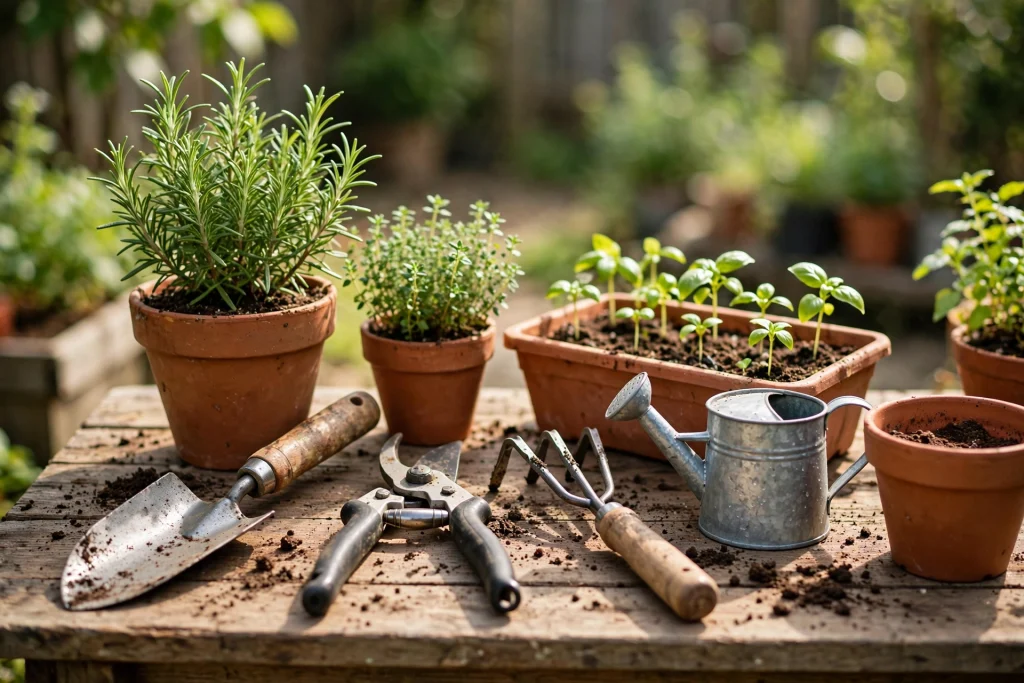
The hand trowel is the single most-used tool in container gardening. You’ll use it to scoop potting mix into pots, dig planting holes for transplants, and lift seedlings out of cell trays. Look for a one-piece steel trowel with depth markings on the blade — those markings save you from guessing when a bulb or seed needs to sit at a specific depth. Avoid flimsy trowels with hollow plastic handles; they bend the first time you hit a packed root ball.
A hand cultivator (mini rake)
A three-pronged hand cultivator loosens the top inch or two of potting mix, which gets crusty and compacted over a season of watering. Loosening the surface helps water soak in instead of running off, and it makes it easier to work granular fertilizer into the mix. Use it gently — container roots are closer to the surface than you’d think.
Transplanting trowel or hori hori knife
Regular trowels are wide and stubby, which is awkward in a small pot. A narrow transplanting trowel slips between crowded seedlings without disturbing their neighbors. A hori hori knife — a serrated Japanese digging knife — does the same job and adds a cutting edge for dividing root balls and opening fertilizer bags. If you buy one specialty tool for containers, make it this one.
Bypass pruners
You will need pruners. Tomatoes need suckers pinched, herbs need harvesting, spent blooms need deadheading, and container-grown peppers and eggplants produce thicker stems than you’d expect by late summer. Bypass pruners (the scissor-style kind) make clean cuts that heal fast. Keep a small pair handy wherever your pots live — if the pruners are out of reach, you’ll break stems with your fingers instead, and plants suffer for it.
Watering Gear That Actually Works for Pots
A watering can with a removable rose
Containers dry out faster than garden beds, so watering is a daily or even twice-daily job in summer. A watering can with a detachable rose head gives you two modes: a gentle shower for seedlings and freshly sown pots, and a direct stream for established plants. Choose a can that holds 1–2 gallons — bigger gets heavy fast when you’re making multiple trips.
A moisture meter
Overwatering kills more container plants than underwatering. Potting mix can look dry on top while staying soggy a few inches down, and guessing wrong rots roots. A simple probe-style moisture meter costs little and takes the guesswork out: push it into the root zone and water only when it reads dry. After a few weeks, you’ll calibrate your own instincts and reach for it less often.
A drip irrigation kit or self-watering setup
If you travel, or just want consistency, drip irrigation is worth it even for a handful of pots. A small battery-timer kit with drip stakes keeps every container evenly watered while you’re away, and steady moisture gives better results than the soak-then-drought cycle of hand watering. For a simpler option, self-watering planters with built-in reservoirs buy you several days between waterings.
Soil, Potting, and Maintenance Essentials
A soil scoop
Potting mix is dusty and gets everywhere. A dedicated scoop — wide, deep, and ideally with a flat edge for scraping the bottom of the bag — makes filling pots far cleaner and faster than using a trowel. It sounds like a luxury until you’ve spilled your fifth bag of mix across a balcony.
A potting tray or tarp
Do your potting and repotting over a tray, a boot tray, or an old tarp. It catches spilled mix for reuse, keeps patios and decks clean, and gives you a clean work surface for dividing plants. A shallow plastic storage bin lid works perfectly and costs nothing.
Gloves that fit
Container work is all fine detail — threading fertilizer into a small pot, plucking tiny suckers, handling prickly herb stems. Oversized gloves kill your dexterity, so find a snug-fitting pair with good grip, ideally with reinforced fingertips. Keep them near your watering can so you actually use them.
Plant labels and a marker
When you sow seeds in trays or pots, you will forget what’s what — every gardener does. Cheap wooden or plastic labels plus a weatherproof marker solve it permanently. Date the labels too; knowing when you planted something tells you when to expect germination and when a slow seedling is actually overdue.
Pest, Feeding, and Support Supplies
A hand sprayer
Container plants face aphids, spider mites, and whiteflies just like garden plants do — sometimes more, because pots crowd plants together. A one-liter pump sprayer lets you apply insecticidal soap or neem oil evenly over foliage. Keep it labeled and used only for pest treatments, not for fertilizer, to avoid mix-ups.
Granular fertilizer and a small measuring spoon
Pots can’t tap into ground nutrients, so container plants rely entirely on what you feed them. A balanced slow-release granular fertilizer applied at planting, topped up through the season, covers most vegetables and flowers. Add a dedicated measuring spoon (a tablespoon lives in many fertilizer bags for a reason) so you’re feeding accurately rather than eyeballing it.
Stakes, cages, and twine
Tomatoes, peppers, dahlias, and many container flowers need support. Small tomato cages, bamboo stakes, and a ball of garden twine cover nearly every situation. Stake at planting time — trying to thread a cage over a full-grown tomato plant never goes well.
Nice-to-Have Extras
- A rolling plant caddy. Large pots are heavy, and you’ll want to move them for sun, storms, or cleaning. A wheeled caddy under each big pot saves your back.
- Pruning snips. Smaller and lighter than full pruners, perfect for harvesting herbs and deadheading flowers all afternoon.
- A folding stool or kneeling pad. Container gardening keeps you at pot level; a pad or low stool makes long sessions comfortable.
Building Your Kit Without Overspending
You don’t need everything at once. Start with a hand trowel, pruners, a watering can, and gloves — that quartet handles 90 percent of container tasks. Add the moisture meter and sprayer next, since watering and pests are where beginners lose plants. Buy the rest as your container collection grows. And store your tools in a small tote or bucket caddy near your pots; tools you have to hunt down don’t get used.
Container gardening rewards attention more than equipment. With this toolkit within arm’s reach, you’ll spend your time enjoying your plants instead of improvising.
Explore our hand tools and pruning gear for sturdy trowels, pruners, and cultivators built for container work, plus watering solutions sized for pots and planters: garden tool sets and watering and irrigation.
