Gardening Tips
The Best Soil for Raised Bed Gardens: Mixes, Ratios & Buying Guide
Oct
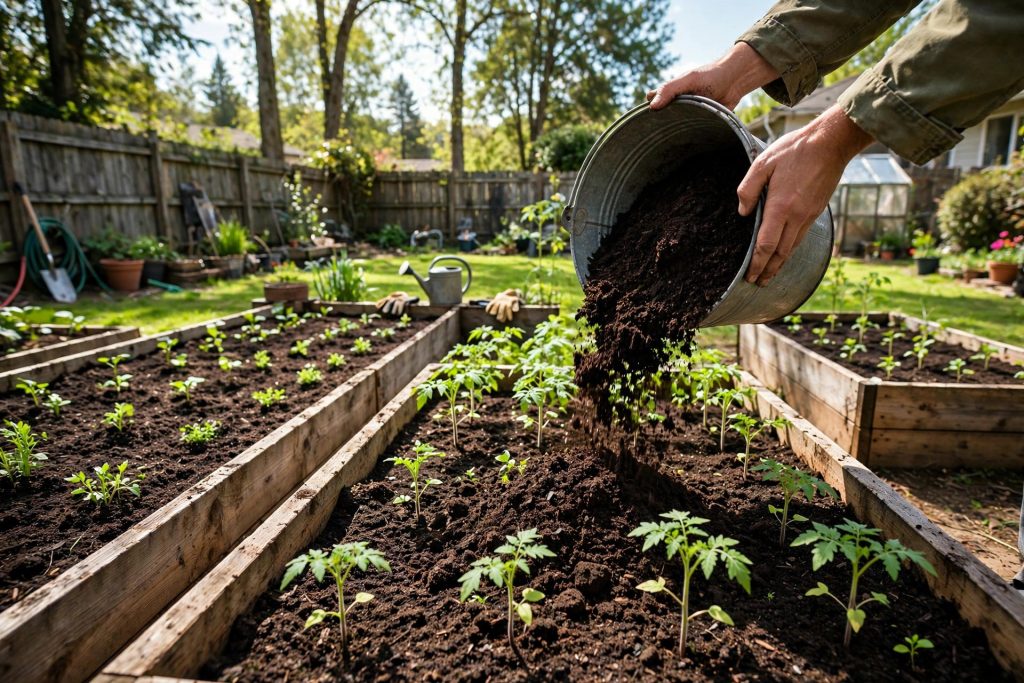
Raised beds are one of the easiest ways to grow more food in less space. They warm up faster in spring, drain better than compacted ground, and let you garden without fighting rocky or clay-heavy native soil. But here is the secret most beginners miss: the soil you put into the bed matters more than the bed itself. Fill a raised bed with plain dirt from your yard and you will end up with a brick-like block that starves your plants. Fill it with the right mix and your vegetables will practically grow themselves.
Why Raised Beds Need Special Soil
Regular garden soil from the ground is designed by nature for the ground — not for a contained box. When you shovel it into a raised bed, it compacts over time, drains poorly, and often brings weed seeds, diseases, and pests along for the ride.
Raised bed soil needs to do three jobs at once:
- Drain quickly so roots never sit in waterlogged soil
- Hold moisture and nutrients so plants do not dry out between waterings
- Stay loose and fluffy so roots can spread and soil life can thrive
The good news is that you get to start from scratch. Think of your raised bed as a container, and build the perfect growing medium on purpose.
The Classic Raised Bed Mix: The 60/30/10 Formula
Ask ten experienced gardeners for their recipe and you will get ten answers, but almost all of them follow the same basic formula:
- 60% topsoil — the structural base that gives the mix body
- 30% compost — the nutrient engine that feeds plants and soil life
- 10% aeration material — something like perlite or coarse vermiculite that keeps the mix light and drainable
This ratio is forgiving. If your topsoil is a little heavy, bump up the aeration. If your compost is rich and dark, you can go a little heavier on it. The goal is a mix that, when you squeeze a handful, holds together loosely for a second and then crumbles apart — not a muddy ball, and not dry dust.
Bagged Mixes vs. DIY: Which Should You Choose?
For one or two small beds, bagged soil is the simplest path. For larger projects, mixing your own saves serious money. Here is how the options compare:
Bagged raised bed mix (e.g., 1.5–2 cu ft bags)
– Pros: Convenient, consistent quality, often pre-fertilized, no math required
– Cons: Expensive at scale (a single 4×8 bed can need 20+ bags), quality varies by brand
– Best for: 1–2 small beds, or topping off existing beds
Bulk “garden mix” from a landscape supplier
– Pros: Far cheaper per cubic foot, delivered by the truckload
– Cons: Quality varies wildly — some is great, some is basically screened fill dirt
– Best for: Filling many beds at once; ask the supplier what is in it before ordering
DIY mix (buying topsoil, compost, and perlite separately)
– Pros: Full control over quality, cheapest option for large volumes, endlessly adjustable
– Cons: More labor, you need space to blend it
– Best for: Gardeners filling 3+ beds who want the best possible soil
If you go the bulk or DIY route, inspect before you commit. Good raised bed soil should smell earthy (not sour), look dark, and crumble in your hand. If a bulk mix looks gray and cloddy, keep shopping.
Key Amendments Worth Knowing
Beyond the big three ingredients, a few amendments can take your mix from good to great:
- Perlite — those little white volcanic pebbles. They never break down, so they keep the mix draining freely for years. Essential if your topsoil runs heavy.
- Vermiculite — a mineral that holds water like a sponge while still keeping things airy. Great for beds that dry out fast in hot climates.
- Coco coir — shredded coconut husk that retains moisture and resists compaction. A renewable alternative to peat moss, and it rewets more easily when it dries out.
- Worm castings — essentially super-compost. A little goes a long way as a nutrient booster.
- Aged manure — rich in nitrogen and organic matter. Just make sure it is composted or aged, never fresh, which can burn plants.
You do not need all of these. A solid base mix plus one or two amendments matched to your climate is plenty.
Do Not Skip the pH Check
Soil pH controls whether plants can actually use the nutrients around their roots. Most vegetables are happiest between 6.0 and 7.0 — slightly acidic to neutral. Blueberries are the famous exception, wanting a much more acidic 4.5–5.5.
A simple $10–15 soil test kit from a garden center (or your local cooperative extension service) will tell you where you stand. If your mix is too acidic, garden lime raises pH. If it is too alkaline, elemental sulfur or extra compost brings it down. Test once when you fill the bed, and retest every year or two — compost and fertilizers gradually shift pH over time.
How Much Soil Do You Actually Need?
This is where beginners either overbuy or make three extra trips to the store. The math is simple:
Length (ft) × Width (ft) × Depth (ft) ÷ 27 = cubic yards needed
Example: a standard 4 × 8 ft bed, 12 inches deep:
4 × 8 × 1 ÷ 27 = 1.19 cubic yards (about 32 cubic feet)
Most bagged mixes list volume in cubic feet. Divide your total cubic feet by the bag size to get your bag count — then buy a couple of extra bags. Soil settles after the first few waterings, and you will want some on hand to top off.
Pro tip: fill the bottom of deep beds (over 12 inches) with logs, branches, straw, or leaves. It cuts the soil you need to buy and feeds the bed as it breaks down.
Refreshing Your Soil Each Season
Raised bed soil is not a one-and-done purchase. Plants pull nutrients out every season, and the mix settles and compacts. A little annual maintenance keeps beds productive for years:
- Top-dress with 2–3 inches of compost each spring before planting. This replaces lost nutrients and organic matter.
- Loosen the top few inches with a hand fork — no deep tilling needed, which disturbs soil life.
- Retest pH every couple of years and adjust if needed.
- Rotate crops so the same plant family does not drain the same nutrients from the same spot year after year.
- Mulch the surface with straw or shredded leaves during the growing season to retain moisture and feed worms.
With this routine, a well-built bed only gets better with age.
The Bottom Line
Great raised bed soil is not complicated: roughly 60% topsoil, 30% compost, and 10% aeration material, adjusted to your climate and checked for pH. Buy bagged mix for small projects, go bulk or DIY for big ones, and refresh with compost every spring. Get the soil right and everything else — watering, fertilizing, pest control — gets noticeably easier.
Ready to dig in? Browse digging and planting tools to find the trowels, forks, and hand tools that make filling and maintaining raised beds a pleasure instead of a chore.
