Gardening Tips
Drip Irrigation vs. Sprinklers: Which Is Better for Your Garden?
Oct
Watering is the chore no gardener can skip. Miss a hot week in July and your tomatoes sulk, your lawn turns crunchy, and your flower beds look tired. But how you water matters almost as much as how often. The two most popular options for home gardeners — drip irrigation and sprinklers — work in completely different ways, and picking the right one can save you hundreds of gallons of water and a lot of weekend labor.
So which is better? The honest answer is: it depends on what you are growing. Let us break it down.
How Drip Irrigation Works
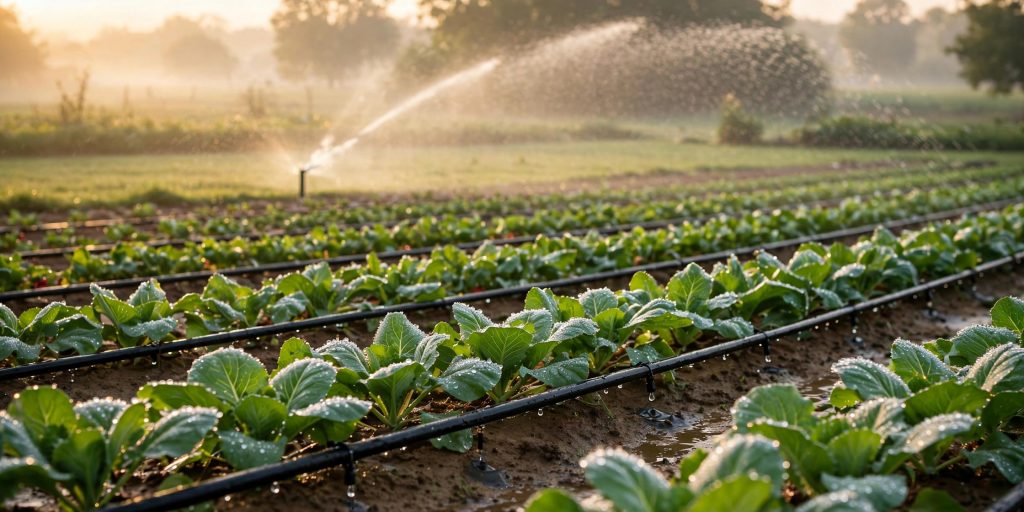
Drip irrigation delivers water slowly and directly to the base of each plant through a network of tubing, emitters, and sometimes soaker hoses. Instead of spraying water into the air, tiny emitters release a steady drip — usually measured in gallons per hour — right where the roots need it.
Think of it as giving each plant its own personal water bottle with a slow leak. The soil around the root zone stays evenly moist, while the paths, mulch, and spaces between plants stay dry.
A basic home system includes a connection to your outdoor spigot, a filter, a pressure regulator, main tubing, and emitter lines or drip tape running along your rows or beds. Timers can automate the whole thing so you never have to remember to turn the water on.
How Sprinklers Work
Sprinklers do the opposite: they throw water up into the air so it falls over a wide area, mimicking rainfall. Oscillating sprinklers sweep back and forth, rotating sprinklers spin in circles, and fixed pop-up heads (common in installed lawn systems) rise from the ground on a schedule.
You have probably used one. Attach a sprinkler to a garden hose, turn on the spigot, and within minutes a big circle of your yard is getting soaked. In-ground systems do the same thing automatically, with zones controlled by a timer box.
Drip Irrigation: Pros and Cons
Pros
- Extremely water-efficient. Because water goes straight to the root zone with almost no evaporation or runoff, drip systems can be up to 90% efficient. That is a big deal in dry states — and on your water bill.
- Fewer weeds. Dry soil between plants means weed seeds never get the moisture they need to sprout.
- Healthier plants. Leaves stay dry, which dramatically reduces fungal diseases like powdery mildew and blight that thrive on wet foliage.
- Works on slopes and odd shapes. Slow dripping soaks in instead of running off, making it ideal for hillsides and narrow beds.
- Easy to automate. A simple battery timer on your spigot turns a drip system into a set-and-forget setup.
Cons
- Higher upfront cost and effort. Tubing, emitters, filters, and regulators add up, and laying out the system takes a weekend afternoon.
- Emitters can clog. Hard water, algae, and tiny debris can block emitters, so filters and occasional flushing are a must.
- Problems hide underground. A chewed or disconnected line under mulch can go unnoticed until a plant wilts.
- Not practical for lawns. Drip is made for rows and individual plants, not for covering hundreds of square feet of turf.
Sprinklers: Pros and Cons
Pros
- Great coverage. One sprinkler can water a large lawn or a wide bed in a single session.
- Cheap and simple to start. A decent oscillating sprinkler costs less than a pizza, and setup takes five minutes.
- Good for lawns. Turf grass needs even coverage over a broad area — exactly what sprinklers do best.
- Cools plants on hot days. Overhead watering can lower leaf temperatures during heat waves.
Cons
- Lots of wasted water. Evaporation, wind drift, and overspray onto sidewalks and driveways mean typical sprinkler efficiency is only 50–70%.
- Wets the foliage. Constantly wet leaves invite fungal disease, especially on tomatoes, roses, and cucumbers.
- Waters the weeds too. Everything in the spray zone gets watered — wanted or not.
- Runoff on slopes. Spraying water faster than soil can absorb it sends water (and fertilizer) down the hill.
Head-to-Head: The Key Differences
Water efficiency
Drip wins by a mile. Studies consistently show drip irrigation using 30–50% less water than sprinklers for the same garden beds. If you live somewhere with water restrictions or tiered water pricing — looking at you, California, Arizona, and Texas — drip pays for itself quickly.
Cost
Sprinklers win on startup cost. A hose-end sprinkler is pocket change; even a basic in-ground zone system is usually cheaper than outfitting the same area with drip components. But factor in the water bill over a few seasons, and drip often comes out ahead for garden beds.
Best use cases
- Lawns: Sprinklers, no contest. Drip cannot practically cover turf.
- Vegetable gardens and raised beds: Drip. Precise watering, fewer weeds, healthier plants.
- Flower beds and borders: Drip for the win, especially with mixed plantings that have different water needs.
- Containers and hanging baskets: Drip (micro-sprayers or drip stakes on a timer) beats hand-watering and overhead spray.
- Newly seeded areas: Gentle sprinklers or misters until seeds germinate, then switch to drip.
Installation difficulty
A hose-end sprinkler: trivial. An in-ground sprinkler system: moderate to hard — trenching, PVC pipe, valves, and wiring a controller is a real project. A drip system for raised beds: easy to moderate. If you can connect a garden hose and poke emitters into tubing, you can install drip in an afternoon.
Maintenance
Sprinklers need seasonal attention: adjusting heads, fixing leaks from mower damage, and winterizing (blowing out lines) in cold climates. Drip needs filter cleaning, occasional emitter checks, and line flushing — smaller jobs, but more frequent ones.
The Verdict: Which Should You Choose?
For most home gardeners, the smart answer is both — matched to the job:
- Use sprinklers for your lawn, where broad, even coverage is exactly what grass needs.
- Use drip irrigation for your garden beds, vegetable rows, and containers, where precision saves water and keeps plants healthier.
If you can only pick one and you grow mostly vegetables, herbs, or flowers in beds, go with drip. Your water bill, your plants, and your weekends will thank you. If your pride and joy is a lush green lawn, sprinklers are the tool for the job.
A Quick Note on Timing
Whichever system you choose, when you water matters. Water early in the morning — between 5 and 9 a.m. — so plants can drink before the heat of the day and foliage has time to dry. Evening watering leaves plants damp overnight, rolling out the red carpet for fungal disease. A fifteen-dollar timer makes perfect timing automatic.
Gear Up for Smarter Watering
Ready to upgrade your watering game? Whether you are laying out your first drip lines or replacing a tired old sprinkler, having the right gear makes all the difference. Browse our watering and irrigation collection for hose nozzles, sprinklers, and watering tools built for American gardens — all with $7.99 flat US shipping and 30-day returns.
